
Table of Contents
- Why Pest Control Matters in Commercial Foodservice
- Integrated Pest Management for Restaurants
- Restaurant Pest Control Checklist: Prevention and Detection
- Common Pests in Commercial Kitchens and How to Address Them
- Food Service Pest Management: Safe Treatment Methods
- Restaurant Pest Control Service Frequency and Scheduling
- Inspection-Ready Documentation and Health Compliance
- What to Expect from a Reliable Commercial Pest Control Partner
- Frequently Asked Questions
Last Updated: October 11, 2026
Why Pest Control Matters in Commercial Foodservice
Restaurant pest infestations aren’t just an operational headache, they’re a direct threat to your business survival, which is why commercial pest control restaurants require immediate attention.
Pests in commercial kitchens contaminate food, spread disease, and create liability exposure. Rodents leave droppings near prep surfaces. Cockroaches carry pathogens that survive cooking temperatures. Flies land on garbage, then land on your plating station.
The stakes are higher in foodservice than almost any other industry. Unlike an office building where a pest problem affects productivity, a restaurant’s pest problem directly impacts food safety and customer trust.
At EJ’s Pest Control, we understand the challenges restaurant owners face when dealing with pest issues. The difference between catching an infestation early and dealing with an outbreak is often the difference between a minor service call and a health department closure.
Integrated Pest Management for Restaurants
Integrated Pest Management (IPM) is a systematic approach that combines inspection, prevention, monitoring, and targeted treatment to control pests while minimizing chemical use and protecting food safety.
IPM works because it treats the root cause, not just the symptom. Instead of spraying and hoping, IPM identifies why pests are present, removes what attracts them, and seals the entry points they use. This approach is especially critical in restaurants where food, water, and warmth create an ideal pest environment.
An effective IPM program for restaurants includes:
- Inspection and monitoring: Regular checks for pest activity, entry points, and conditions that attract pests
- Exclusion: Sealing cracks, gaps, and holes where pests enter
- Sanitation: Removing food sources, grease buildup, and standing water
- Storage management: Keeping food in sealed containers and off the floor
- Targeted treatment: Using the least-toxic method necessary when pests are found
The key difference between IPM and reactive pest control is timing. Reactive services respond after you call with a problem. IPM prevents the problem from developing in the first place. When pests do appear, they’re caught early before populations explode.
This preventive mindset can lead to fewer pest incidents and potentially lower overall treatment costs than relying on emergency calls alone.
Restaurant Pest Control Checklist: Prevention and Detection
A restaurant-specific pest control checklist gives you a clear way to identify vulnerabilities before they become infestations. Use this checklist monthly or before health inspections.
Exterior and Entry Points:
- Inspect foundation for cracks wider than 1/8 inch
- Check door seals and weatherstripping for gaps
- Verify all windows close completely and screens are intact
- Look for holes around pipes and utility penetrations
- Ensure dumpsters are at least 10 feet from building entry
- Check for standing water near the building
Kitchen and Food Preparation Areas:
- Inspect under and behind all equipment for droppings or dead insects
- Check drain covers and pipes for debris or pest activity
- Verify food storage containers are sealed and elevated off floors
- Look for grease buildup in corners and along baseboards
- Check for moisture accumulation under sinks and ice machines
- Inspect walk-in cooler and freezer seals and floors
Dining and Service Areas:
- Check trash bins for pest access points
- Inspect baseboards and corners for droppings
- Look for dead insects on windowsills or light fixtures
- Verify condiment bottles and dispensers are clean and sealed
- Check under tables and chairs for food debris
Storage and Back-of-House:
- Inspect dry storage for rodent droppings or gnaw marks
- Check cardboard boxes for pest entry or activity
- Verify shelving is at least 6 inches off the floor
- Look for moisture or mold that attracts pests
- Check around HVAC units and vents for entry points
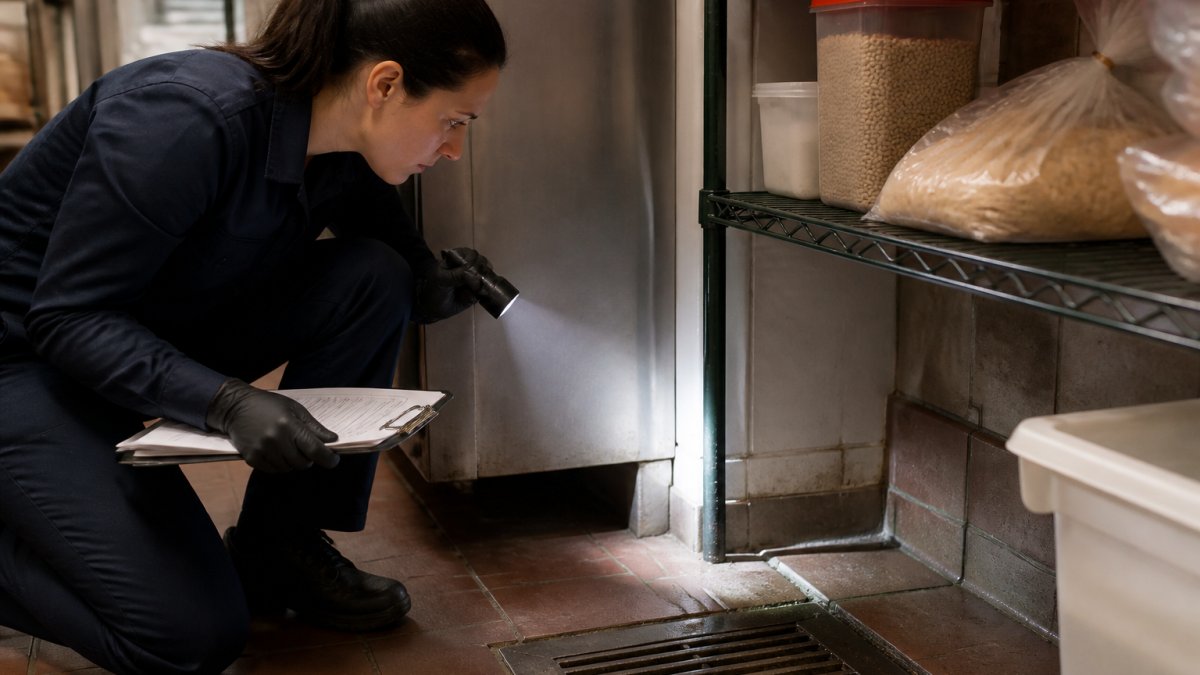
Documentation matters. Take photos of any suspicious activity and note dates. This record becomes valuable if a health inspector visits or if you need to prove you’ve been proactive about pest management. It also helps your pest control service understand the scope of any problem.
Common Pests in Commercial Kitchens and How to Address Them
Cockroach Control
Cockroaches are the most persistent pest in commercial kitchens. They hide in cracks, under equipment, and inside walls during the day, then emerge at night to feed. A single female can produce hundreds of offspring in weeks, which is why early detection matters.
Signs of cockroach activity include droppings that look like ground pepper, a musty odor, and smear marks on surfaces where they travel. You might see them in the pantry, under the dishwasher, or in drain areas.
Cockroach control requires both exclusion and treatment. Seal cracks and gaps where they hide. Remove grease buildup and standing water that attracts them. Reduce clutter in storage areas. Then, targeted treatments address active populations. This combination prevents them from returning.
Rodent Control
Mice and rats enter through holes as small as a dime and a quarter respectively. Once inside, they contaminate food, gnaw through packaging, and leave droppings everywhere. A single mouse can produce 50-75 droppings per day, creating a significant health hazard.
Rodent activity shows up as droppings, gnaw marks on boxes or pipes, greasy rub marks along walls, and dead insects that rodents have eaten. You might hear scratching in walls or ceilings at night.
Rodent control focuses on exclusion first. Seal all entry points, especially around pipes and vents. Remove food sources and secure trash in sealed containers. Reduce clutter that gives them hiding spots. When rodents are present, snap traps and electronic traps are more effective and safer than poison, especially in food-handling areas.
Fly and Other Insect Control
Flies breed in garbage, grease traps, and organic debris. A fly can go from egg to adult in as little as seven days, which means a small problem becomes a large one quickly. Fruit flies, drain flies, and house flies all pose contamination risks in restaurants.
Fly control starts with sanitation. Clean drain areas regularly. Seal garbage bins. Remove standing water. Keep fruit and produce in sealed containers. Ensure trash is removed daily.
When flies are present, targeted treatments combined with exclusion work best. Install air curtains above doors to prevent flies from entering. Use sticky traps to monitor activity. If an infestation develops, professional treatment removes the population while sanitation prevents return.
Other insects like ants and stored-product pests require similar approaches: find the source, remove attractants, seal entry points, and treat only when necessary.
Food Service Pest Management: Safe Treatment Methods
Safe pest management in restaurants means using methods that don’t contaminate food or create health risks. This is where EPA-approved treatments and professional expertise make a real difference.
The safest approach combines physical methods with targeted chemical treatments only when needed. Exclusion, sealing entry points, removes pest access entirely. Traps monitor activity and catch pests without chemicals. Sanitation removes what attracts them.
When chemical treatment is necessary, professionals use methods that protect food safety. Gel baits target specific pests without broad application. Perimeter treatments keep chemicals away from food-prep surfaces.
At EJ’s Pest Control, we use EPA-approved methods designed for food environments. This means your restaurant stays compliant with health codes while eliminating the actual pest problem.
The key is having a professional who understands both pest biology and food safety regulations. A generic pest control approach doesn’t account for the unique risks in commercial kitchens.
Restaurant Pest Control Service Frequency and Scheduling
How often you need commercial pest control restaurants depends on your specific situation, but most establishments benefit from regular scheduled service rather than emergency-only response.
Many restaurants operate on a monthly or bi-weekly service schedule. This frequency allows technicians to monitor pest activity, catch problems early, and maintain preventive measures. During peak seasons or if you’ve had past issues, more frequent visits make sense.
The ideal schedule includes:
- Initial comprehensive inspection: Baseline assessment and treatment plan
- Regular monitoring visits: Monthly or bi-weekly depending on risk level
- Follow-up treatments: Additional visits if activity is detected
- Seasonal adjustments: Increased frequency during warmer months when pest activity rises
Scheduling matters strategically. Many restaurants prefer evening or early-morning service times to minimize disruption. Some choose overnight treatment before reopening. Your pest control partner should work around your operational schedule.
Documentation of service dates and findings is essential for health inspections. A service record showing consistent pest management demonstrates you’re taking the issue seriously and maintaining compliance.
Inspection-Ready Documentation and Health Compliance
Health inspectors expect to see evidence that you’re actively managing pest control. Documentation protects you and strengthens your defense if a violation is noted.
Keep records that show:
- Service dates and provider information
- Inspection findings and pest activity detected
- Corrective actions taken
- Photos of problem areas and repairs made
- Maintenance logs for exclusion work and sanitation
This documentation serves multiple purposes. It proves compliance to regulators. It helps your pest control provider understand your facility’s history. It protects you if a customer makes a complaint. It also helps you track whether your current approach is working.
When a health inspector visits, having organized records demonstrates professionalism and proactive management. Inspectors are far more lenient with restaurants that show they’re actively addressing pest risks than those scrambling to explain a sudden problem.
Work with your pest control service to establish a documentation system. Many providers include inspection reports with photos and findings. Use these as your compliance record.
What to Expect from a Reliable Commercial Pest Control Partner
A reliable pest control partner for your restaurant does more than show up and spray. They understand your business, your food safety concerns, and your schedule.
Look for a provider that:
- Conducts a thorough initial inspection before proposing a treatment plan
- Explains the pest problems they find and why they occur
- Offers a customized service plan tailored to your specific facility
- Uses EPA-approved methods appropriate for food environments
- Provides detailed inspection reports with photos and findings
- Responds promptly to emergency situations
- Maintains consistent communication about activity and recommendations
- Backs their work with a guarantee
Response time matters in restaurants. When you discover an active pest problem, you need someone who can respond quickly, not days later.
At EJ’s Pest Control, we understand the pressure restaurant owners are under. Our fully licensed and insured specialists conduct thorough inspections, use EPA-approved methods, and provide the documentation you need for health compliance.
The right partner becomes part of your food safety team, not just a vendor you call when there’s a problem. They help you prevent infestations before they start and support your reputation for cleanliness and safety.
Pest problems in restaurants don’t resolve themselves, they escalate. A proactive approach to commercial pest control for restaurants protects your customers, your staff, and your business reputation.
Frequently Asked Questions
What does a commercial pest control service for restaurants include?
A comprehensive commercial pest control service includes regular pest inspections, monitoring for activity, targeted treatment of cockroaches, rodents, and flies, sanitation recommendations, exclusion work to seal entry points, and documentation for health inspections. Many providers offer customized service plans based on your restaurant’s layout, food storage areas, and pest history. The goal is to prevent infestations before they occur and respond quickly if activity is detected.
How often should a restaurant schedule pest control service?
Most restaurants benefit from monthly or bi-weekly service visits, depending on kitchen size, food handling volume, and local pest pressure. Quick-service restaurants with high turnover may need more frequent visits, while smaller establishments might start with monthly service. Your pest control provider should assess your specific risks and recommend a service frequency that keeps your facility protected while meeting health code requirements.
How do pest control companies treat restaurants safely without contaminating food?
Professional pest control providers use EPA-approved methods designed for food-handling environments. Treatments are applied to targeted areas like entry points, drains, and harborage zones away from food prep surfaces. Staff are instructed to remove or cover food and equipment before treatment, and providers coordinate visits during closed hours when possible. Safe application, proper ventilation, and clear protocols minimize risk to your customers and comply with food safety regulations.
What should a restaurant do to prevent pests between service visits?
Implement daily sanitation habits: clean drains, seal food storage containers, remove trash promptly, and keep dining areas free of crumbs and spills. Inspect incoming deliveries for pests, maintain proper waste management, and fix plumbing leaks that attract rodents. Seal visible cracks and gaps around doors, windows, and utility penetrations. Regular staff training on pest prevention and reporting suspicious activity helps catch early signs before infestations take hold.