
Table of Contents
- Why Ants Keep Coming Back to Your Kitchen
- Step 1: Remove Food Sources and Crumbs
- Step 2: Clean Surfaces, Floors, and Ant Pheromone Trails
- Step 3: What Kills Ants Instantly in the Kitchen
- Step 4: How to Get Rid of Ants in the Kitchen Naturally
- Step 5: Baiting the Colony (and How Long Ant Bait Takes to Work)
- How to Prevent Ants in the Kitchen for Good
- When DIY Fails: Calling a Pest Control Professional
- Frequently Asked Questions
Last Updated: October 5, 2026
Why Ants Keep Coming Back to Your Kitchen
Ants in the kitchen rarely show up by accident. This guide from EJ’s Pest Control breaks down five ways to get rid of ants in the kitchen fast, plus how to keep them from returning.
Most store-bought sprays kill the ants you see. They do nothing about the colony behind your cabinets. That is why so many kitchens see the same trail return a week later.
So here is the plan we walk homeowners through: find the entry point, cut off the food and water, wipe the trail, bait the colony, then seal the gaps.
How to Find Where Ants Are Entering the Kitchen
Follow the trail to its source. Ants march in a line from the nest to the food, so trace that line backward to the smallest crack you can find.
Check these common entry points:
- Gaps under the backsplash and behind the stove
- Cracks along baseboards and window frames
- Holes where pipes and wires enter the wall
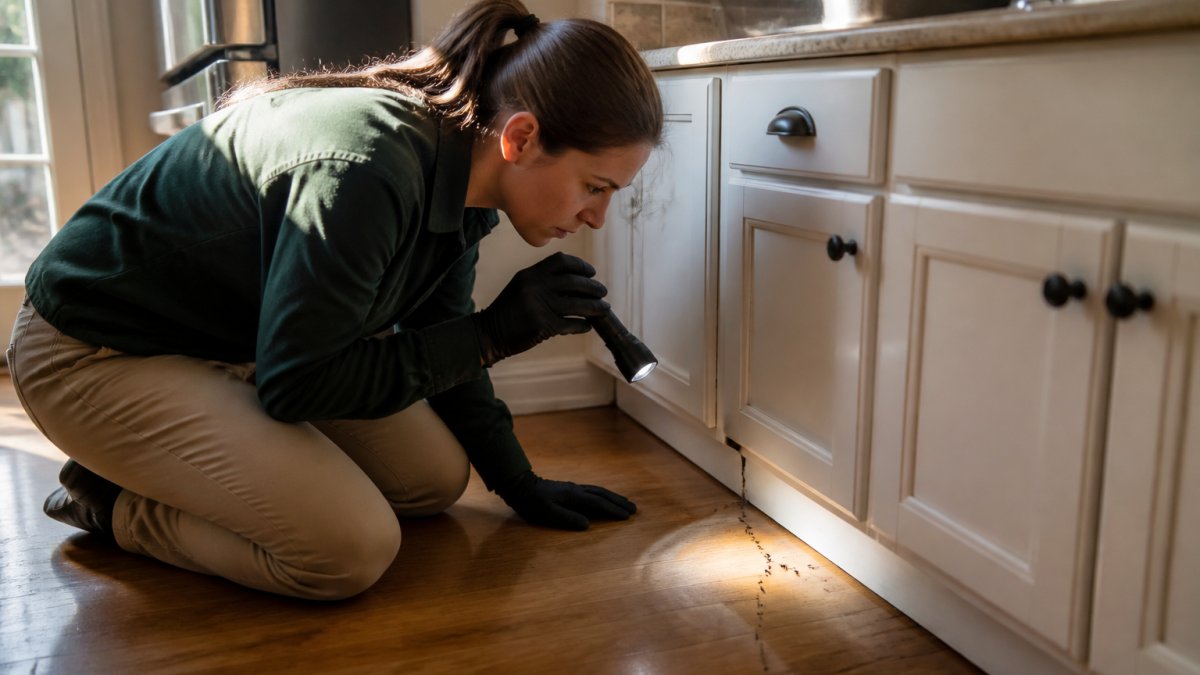
Once you know the entry point, you know where to focus. That single detail saves hours of wasted effort.
Step 1: Remove Food Sources and Crumbs
The fastest way to slow an ant infestation is to take away the food. Ants in the kitchen survive on crumbs, spills, pet food, and open packages.
Start with a full sweep of the kitchen:
- Wipe counters, stovetops, and the floor under appliances
- Vacuum cracks and corners where crumbs collect
- Rinse recyclables before they go in the bin
Sealed Containers and Proper Food Storage
Move cereal, sugar, flour, crackers, and pet food into sealed containers. A cardboard box or a rolled bag will not stop ants. Glass jars with tight lids or hard plastic containers will.
Check your pantry for anything already opened. A single spilled bag of sugar can feed a colony for weeks.
Ants can slip through gaps as thin as a credit card. If a lid does not snap or seal tight, it is not ant-proof.
Step 2: Clean Surfaces, Floors, and Ant Pheromone Trails
Cleaning does more than remove crumbs. It erases the pheromone trail ants leave behind to guide the rest of the colony.
A pheromone trail is a scent path that worker ants lay down so others can follow it to food. If you only kill the ants you see, new ones follow the same trail within hours.
Vinegar, Soapy Water, and Other Trail Wipes
You do not need harsh chemicals to wipe a trail. A few common mixes work well:
- Vinegar and water: equal parts in a spray bottle, wipe the trail and the entry point
- Soapy water: a few drops of Castile soap or dish soap in warm water
- Rubbing alcohol: diluted with water for sticky spots
Wipe the whole trail, not just the visible ants. Then wash the cloth or toss the paper towel so the scent does not spread.
Step 3: What Kills Ants Instantly in the Kitchen
Soapy water is the fastest kitchen-safe kill. Spray it directly on the ants you see and they stop within seconds, without leaving a chemical residue on your counters.
For a quick mix, add a spoonful of liquid soap to a spray bottle of water. Spray the trail, then wipe it up. This handles the ants in front of you, but it will not touch the colony.
EPA guidance on safe pesticide use in the home
Do not spray insecticide along a trail you plan to bait. The spray kills the workers before they carry the bait back to the nest, and the colony survives.
Step 4: How to Get Rid of Ants in the Kitchen Naturally
Natural remedies work best as a barrier and a repellent, not as a colony killer. Use them to keep ants out while you bait the nest, and match the remedy to the ant you actually have, because the same pantry ingredient that stops one species does nothing to another.
Match the Remedy to the Ant You Have
You do not need a lab to tell the common kitchen ants apart. A few visible traits are enough to pick a smarter treatment:
- Small black or dark brown ants trailing in a steady line (often called sugar ants or odorous house ants): these follow sweet trails and respond well to sweet liquid baits. Crush one and smell it, odorous house ants give off a rotten-coconut odor.
- Tiny light-brown or reddish ants, sometimes called grease ants or thief ants: these lean toward grease, protein, and oily crumbs. A sweet bait alone often fails; a protein- or grease-based bait works better.
- Large black ants, about a quarter inch or bigger (carpenter ants): these do not just forage, they excavate damp or rotting wood. Seeing them indoors, especially winged ones, is a sign to stop DIY baiting and get the structure checked.
A common pattern is that homeowners buy a sweet bait, watch the trail ignore it, and conclude that baiting does not work. Usually the bait was simply the wrong match for the species.
Repelling Ants With Strong Odors and Pantry Ingredients
Ants navigate by scent, so a stronger scent can throw them off the trail. Common pantry options include:
- Cinnamon: sprinkle along entry points and windowsills; refresh it after wiping counters, since the oils fade
- Cayenne pepper: dust it where ants cross, but keep it away from pet bowls and food-prep surfaces
- Essential oils: peppermint, lemon, or tea tree on a cotton ball near entry points; reapply every few days because the scent dissipates
These options repel ants and make the kitchen less inviting. They are not a cure on their own, and they will not reach a colony behind the cabinets.
Repellents and baits pull in opposite directions. If you are baiting, keep strong-smelling oils and powders away from the bait stations, the scent can keep workers from finding the bait at all.
Keeping Natural Remedies Kitchen-Safe
Because these remedies sit near food, placement matters as much as the ingredient:
- Keep powders and oils off counters, cutting boards, and anywhere food is prepped
- Store homemade mixes in labeled containers, out of reach of children and pets
- Wipe down food-contact surfaces after any spray or powder application
Used this way, natural remedies buy you time and cut down traffic while the bait does the real work.
Step 5: Baiting the Colony (and How Long Ant Bait Takes to Work)
Bait is the only DIY method that targets the colony. Workers carry the bait back to the nest and share it, which is how you reach the queen. But baiting only works if you give it time, place it correctly, and resist the urge to spray.
You have two main choices:
- Homemade bait: a mix of borax and a sweet liquid like syrup or honey. Keep the borax concentration low, a common ratio is about one part borax to three parts liquid sweetener. Too strong and the workers die before they carry it back.
- Store-bought bait stations: pre-filled and ready to place. Match the bait type to your ant, sweet baits for sugar ants, protein or grease baits for the small reddish foragers.
Where to Place Bait So Ants Actually Find It
Place bait stations along the trail, not on top of it, so ants find them on the way to food. A few placement rules make a measurable difference:
- Put stations close to the entry point and along the path, not in the middle of open floor
- Place several small stations rather than one large one, ants recruit faster to multiple sources
- Keep them out of direct sunlight and away from strong-smelling cleaners or repellents
How Long Ant Bait Takes to Work
Baiting is not instant, and the first day or two often looks worse before it looks better. A typical pattern:
- Day 1-2: activity around the bait increases as workers recruit nestmates. Do not panic and do not spray.
- Day 3-7: the trail should start to thin as the bait reaches the colony.
- Week 2: most light infestations are noticeably reduced. Keep stations in place in case foragers return.
Keeping Bait Safe Around Children and Pets
Bait stations belong in a kitchen, so placement and cleanup matter:
- Put stations in spots kids and pets cannot reach, behind appliances, inside lower cabinets, along the back of the counter
- Never transfer bait into an unlabeled container or a food jar
- Wash your hands after handling bait, and wipe up any spilled bait immediately
Why Sprays Can Interfere With Baiting
Sprays and baits work against each other. A spray kills the workers that would otherwise carry bait back to the nest. If you spray first, the colony never gets the bait, and the infestation returns.
Pick one approach. If you bait, stop spraying.
Baiting takes patience. Expect the trail to look worse for a day or two before it slows, because more ants are finding the bait. If nothing changes after two weeks, switch bait types or move to a professional, do not keep repeating the same bait.
How to Prevent Ants in the Kitchen for Good
Prevention comes down to three things: no food, no water, no entry.
- Store all food in sealed containers
- Wipe counters and sweep floors daily
- Fix leaky pipes and dry damp spots under the sink
CDC guidance on keeping pests out of the home
A clean, dry, sealed kitchen gives ants nothing to come back for.
When DIY Fails: Calling a Pest Control Professional
Some infestations need a pro. If you have tried all five steps and ants keep returning, the nest is likely inside a wall or under the foundation, where bait cannot reach.
Call a professional when:
- The trail returns within days of baiting
- You see ants in multiple rooms, not just the kitchen
- You spot winged ants, which can mean a mature colony
At EJ’s Pest Control, our licensed and insured specialists use EPA-approved methods to find the nest and treat it at the source. We serve homes, restaurants, and commercial properties, and every job is backed by our 100% guarantee.
Homeowners and property managers who have tried DIY baiting and still see ants returning within a week.
Frequently Asked Questions
What kills ants instantly in the kitchen?
A spray bottle filled with equal parts water and Castile soap or dish soap kills ants on contact. Vinegar also works but is slower. For immediate knockdown, soapy water is the fastest DIY option. If you have a large trail, avoid spraying the whole line because it disrupts the pheromone trail and can scatter the colony. Focus on visible ants and then set bait for the nest.
How long does ant bait take to work?
Most ant baits take 24 to 72 hours to show a noticeable drop in activity. The worker ants carry the bait back to the colony, where it gradually spreads. You may see more ants at first because they are recruiting nestmates to the bait. Give it up to two weeks for full colony elimination. If activity continues after two weeks, switch bait types or call a professional.
Are ant baits safe to use around food and pets?
When used as directed, EPA-approved ant baits are safe for kitchens with pets and children. Place bait stations in corners, under appliances, or inside cabinets away from food prep areas. Never put bait directly on counters or near open food. If you have pets that might chew stations, use tamper-resistant bait stations or consult a pest control professional for pet-safe options.
Why do I suddenly have a lot of ants in my kitchen?
A sudden ant invasion usually means scouts found a food or water source and laid a pheromone trail. Crumbs, sticky jars, pet food bowls, or a damp spot under the sink can attract them. Weather changes also drive ants indoors. Follow the trail to the entry point, clean thoroughly, and set bait. If the colony is large, professional treatment may be needed to stop the cycle.
Ants in the kitchen are stubborn, but they follow a pattern you can break. Cut the food, wipe the trail, bait the colony, and seal the entry, and most infestations clear on their own. When they do not, EJ’s Pest Control is ready to help with eco-friendly, EPA-approved treatments, licensed specialists, and a 100% guarantee. Request a quote and get your kitchen pest-free.